Thursday, 25 April 2019

Radiohead - Karma Police Arrest Me Now!

Given that I am and have always been a fan of indie and alt-rock, I know that I’m supposed to like Radiohead. And so I’ve tried - I really have! I’ve been open-minded, making every effort to like them. I’ve even persevered giving Radiohead a good three decades to win me over. But when it comes right down to it, I still hate their music. Yes, I know. ‘Paranoid android’ is cool. And “Fake Plastic Trees” is pretty great, but that’s pretty much it really. 
Thom Yorke has always bothered me. I thought he was weird back in the 90s, and I still think he’s weird now although I do admit a spotty adolescent is more likely to be impressed by Yorke’s soul-sucking neoliberalism than I am! 

I generally don’t mind electronic or even prog’ bands with an art school influence, Radiohead though can feel like a dead end amid the tributaries of its various influences. For whatever reason, I can’t stand them. The closest I’ve really come to liking a Radiohead song is The Pretenders version of ‘Creep’ where Chrissie Hynde absolutely nails the track in a way Radiohead never did.
As a big music fan and collector I’ve been bombarded with 30 years of critical and fan acclaim for Radiohead. I don't mean to take away from their artistry because there is no doubt that they are a talented group of guys, but I just don't like them. I can only gather that there’s something wrong with me, or maybe there’s something there that I’ve yet to get. Or is it just a case of it’s not them, it’s me? 

If you’re a Radiohead fan reading this, congratulations on being way, way smarter than the rest of us simpletons who just want to listen to a song with a good hook or a beat that isn’t in some weirdo 179/4.26 time signature. For me though, the map of my personal tastes has a Radiohead-shaped blank space in one corner, coated with some kind of space-age non-stick material that keeps me from liking them.

Friday, 19 April 2019

Five Top Albums That Are 50 Years Old in 2019

I'm not normally into writing ‘List’ blogs but I couldn’t resist this one. It’s now 50 years since the closing year of that great musical decade, the sixties. In my humble opinion these are my top five great albums from 1969 – and they’re still great albums half a century later!

The Who – Tommy
Tommy was The Who’s fourth studio album. It was an extremely innovative and risky album at the time being a rock opera. Thanks to bands like The Beatles and The Beach Boys albums were becoming more important than the single in rock music. Therefore Pete Townshend wanted to do something to fully capitalize on the album as a continuous art form.
The album told the story of a psychosomatic deaf, dumb and blind lad and his experiences in life. Tommy was essentially a melting pot for Pete Townsend’s ideas about sex, family, spirituality and hero worship.

Keith Moon and John Entwistle's rhythm section got more and more chances to shine throughout this double album than they had previously and manage to achieve some truly jaw-dropping results. Roger Daltrey is finally able to put some real feelings into his singing as he identifies with poor Tommy, just listen to him perform ‘See Me, Feel Me’

Top Tracks
  • See Me, Feel Me/Listening to You
  • We’re Not Gonna Take It
  • Pinball Wizard


The Beatles – Abbey Road
By this point The Beatles were on the verge of breaking up, what with McCartney now trying to be fully in charge of the band (in his eyes at least) and Lennon’s almost non-existent interest in continuing as a part of The Beatles, things hardly indicated that there was any hope for a complete album - let alone a good one! 
The release of ‘Abbey Road’ proved to the world that they actually could leave all those problems behind, and put their heads together creating one last fresh, heart-stirring masterpiece. The album works incredibly well as a whole, with each Beatle getting his highlighted moments. They did end on a high note, though It’s really sad to think that the dream would soon be over.

It might have been their last album but it contained some absolute classics, there are the two George Harrison masterpieces, ‘Here Comes the Sun’ and ‘Something’; both rank alongside the best songs the band ever recorded. Then there’s ‘Come Together’ which must count as one of the greatest opening tracks on any album.

Top Tracks

  • Come Together
  • Here Comes The Sun
  • Something


Sly & the Family Stone - Stand!
Stand! was the fourth album by the funky soul band Sly and the Family Stone released in 1969 a few years before Sly Stone’s drug addiction and enigmatic persona fully materialized. Back then he was changing the way people viewed soul and pop music from a musical, cultural and racial standpoint. ‘Stand!’ catapulted Sly & the Family Stone into mainstream success, combining ample doses of lyrical consciousness and infectious pop song writing into one cohesive record. 
Before transitioning into psych-soul pioneers on their subsequent record, 'There’s A Riot Goin’ On', the group achieved a near-perfect balance of both sides of their career, refining some of their earlier work while hinting at the experimentation to follow. 

You can’t deny that the success of Stand! Did lead to problems within the band, but for me it was a pinnacle of Sly & The Family Stone's career, it’s also a true landmark album for funk music.

Top Tracks

  • Everyday People
  • Don’t Call Me Nigger, Whitey
  • I Want to Take You Higher


King Crimson - In the Court of the Crimson King
'In the Court of the Crimson King' represents the beginning of progressive rock as a genre, and what a start it was! It’s neither pretentious, nor inaccessible - descriptions often levelled at prog’ albums. Yes it’s bombastic and grandiose; yes it has flutes, mellotrons and strange vocals; yes it has some weird, abstract lyrics. It’s also quite simply an excellent album with pleasing musical ideas greeting you around every corner.
Prog’ has tried (largely unsuccessfully) ever since to be as heavy-hitting as the albums opening track ‘21st Century Schizoid Man’. It’s a piece of music so dressed up with over-distorted guitars, finger-flying note runs and radio-filtered hooks that it brought a new focus to rock music. It leant on jazz and classical influence ahead of the English's love of blues music at the time.

King Crimson created a highly influential album that set a benchmark and was referenced by every progressive act for years to come.

Top Tracks

  • 21st Century Schizoid Man
  • Epitaph
  • In The Court of the Crimson King


MC5 – Kick Out The Jams
Kick Out The Jams is one of those albums that is in my 'hall of fame' because it goes completely against the grain of its time. It’s A fabulous explosion of rage, a murderous din with a fair bit of psychedelia thrown in too. Its just 40-odd minutes of sustained, rage fuelled rock - “Kick out the jams, motherfucker!”
This album stands head and shoulders above most modern pop-punk/garage rock style bands. It has a freshness, energy and ability that would put many of today's bands to shame - and you can still understand every word. Throughout the album’s breakneck eight songs, MC5 sprawl through white noise and feedback, cosmic jazz freakouts and polemical frenzy with a glorious sense of abandon.

It’s quite simply one of the most influential albums ever, without this would we have had heavy metal, punk, goth or emo? Maybe? Maybe not! It might not have been until 1977 when punk rock kicked off but its foundation was set in 1969 with Kick Out the Jams. 

Top Tracks

  • Ramblin’ Rose
  • Kick Out The Jams
  • Starship

So There We Have It!!
There we go, five brilliant albums which signified the end of the sixties and influenced the future of much of rock, punk, soul, funk and prog' in the next decade. If you haven't already then get out there and give them a listen - you won't regret it!


Friday, 12 April 2019

Soul II Soul Club Classics Vol I – 30 Years On & Still a Classic

Hard to believe I know, but Club Classics Volume One by Soul II Soul is 30 years old this week! Released in April 1989 its still a landmark album for British soul and R&B today. From the opening funky beat of ‘Keep On Movin’ through to the closing ‘Jazzies Groove’ it impresses.
Soul II Soul was the baby of Jazzie B (formerly known as Beresford Romeo) born in the UK of Antiquan parents. He started the embryonic Soul II Soul with mate Philip “Daddae” Harvey after leaving school. They were modelled on the Jamaican mobile DJ/dub crews and started to get hired for gigs in the mid-eighties. In 1985 a misunderstanding and a fight with Bristol’s “Wild Bunch” who had hired Soul II Soul for a party in London ended up with the Wild Bunch’s Nellee Hooper joining Soul II Soul. Successful club nights followed in rapid succession and resulted in the guys being signed to 10 Records who were a subsidiary of Virgin. Their first singles ‘Fairplay’ and ‘Feel Free’ reached as high as Number 63 in the Top 100 and set the formula for their future.

Club Classics Volume I 
The next single was the great ‘Keep On Movin’’ which opens the album. It was released ahead of the album and reached the Top 5 setting the standard for a whole genre of UK smooth soul. It was a club and pop classic with the most recognisable drum track ever. It sounded American - but it wasn’t! It moved UK black music truly into the mainstream. There was an obvious Chic influence but hey, there’s nothing wrong with learning from the masters. Caron Wheeler’s vocal, Hooper’s production (especially the piano and strings parts) all made ‘Keep On Movin’’ one of the album’s standout tracks.

The other truly great track on the album is ‘Back To Life’. The track got to Number One and was fully deserved.   On the album though it was the original a cappella version rather than the single version. For me this made it even more special. When the drums do eventually kick in they lead very nicely into ‘Jazzie’s Groove’ a track that really epitimised the era, with it’s James Brown style beat and the stabs of horn it was appropriate to not only close the album but the Eighties too, setting a new benchmark for the UK nineties soul and R&B sound that influenced heavily the likes of Jamiroquai, Lisa Stansfield, The Chimes and Massive Attack.

Of the other tracks, ‘Fairplay’ moves you into a grittier, urgent sound especially the feral, funky vocals of Rose Windross. ‘Holdin’ On’ with its message was clearly influenced by Gil Scott Heron. ‘African Dance’ brought African sounds to a Chicago House beat which along with ‘Dance’ has a breeze of chilled-out beats and flutes making the album truly feel like a new dawn for UK soul.

Club Classics Volume I is still a peerless summer soundtrack, which truly provided a blueprint for how things could be done. It was a huge international hit but it was also probably the pinnacle of what Soul II Soul achieved. Wheeler soon left to go solo,  Jazzie B soldiered on, to varying degrees of success, but was always a formidable presence in British black music. Hooper left to have further success with Massive Attack. There were more Soul II Soul albums up to 1997 but none reached the heights of that debut.

A True Classic
Hearing Club Classics Vol One today still takes you right back to the vibrancy, excitement and possibilities of the coming nineties decade. It might be 30 years old now but it hasn’t really aged. Go dig your old copy out now and enjoy it all over again I say.

Friday, 5 April 2019

Mull of Kintyre – A Guilty Pleasure

We all have our "guilty pleasure" music even if we try and deny it. What is it though? Well it’s those songs that we don't want to admit to liking. The term "guilty pleasure" is often used to describe music that is supposedly so bad or cheesy that people feel embarrassed listening to it. The way I see it, if you're enjoying a song on any level then the artist must've done something right! For me,‘Mull of Kintyre’ by Paul McCartney’s Wings is one of my guilty pleasures - and I must admit I’ve still got the 7” single that I was bought as a Christmas present way back in 1977. 

McCartney’s Writing
Paul McCartney always seems to me to be at his best when he’s writing about things that he really cares about, be it a place or someone special. It’s almost like he feels he should put more effort into his writing rather than some of the half-baked, unfinished ideas of songs he has in the middle of most of his albums. I know it’s back in his Beatles days but ‘Hey Jude’ was a really good example of what I’m saying. Written about John Lennon’s son, Julian, it start as a compassionate word to Jules and ends up a no limits anthem for positivity. Similarly, on Penny Lane he takes a beloved Liverpool street from back in his childhood and transforms it into a nostalgia filled idyllic scene.

Mull of Kintyre 
 ‘Mull Of Kintyre’ was written by Paul and Denny Laine back in 1977. The Mull of Kintyre in Scotland is obviously a place very close to McCartney’s heart and as such continues this tradition he has of writing good songs about things he loves. Its lyrics describe the Scottish countryside around the Mull of Kintyre and, while I know that it’s a spectacular landscape, it’s not really the place itself that provides the magic, it’s Paul’s connection with it - or to be even more accurate, Paul’s undeniable love for it.

Somehow he manages to transpose that stunning landscape into the melody, lyrics and overall general atmosphere of the song. You can tell the way he sings “my desire is always to be here” that it really is heartfelt. It feels like he’s putting the place above anywhere else. Now under normal circumstances I’d be pretty irked by someone sticking a load of bagpipes in the middle of a song, but on ‘Mull of Kintyre’ it works, they create a feel for the place almost an atmosphere that draws you into Paul’s own tranquil feelings, the effect when those bagpipes kick in still makes the hairs on the back of my neck stand on end. Close your eyes, and you’ll feel like you’re stood on those “Dark distant mountains with valleys of green”- but without the howling gale force wind of course.

McCartney manages to communicate his own memories and feelings so vigorously, that they transcend any particular landscape. The accent is not put on the Mull itself, but rather on those “smiles in the sunshine and tears in the rain”. And that’s why the track resonates with us from the start. In reality, ‘Mull of Kintyre’ could be about any place that you want it to be - just like ‘Penny Lane’ could. And like ‘Hey Jude’, it can hold any personal connotations you might want to attach to it. 
Despite what some naysayers might say, in my opinion it’s a timeless classic in the same way both ‘Hey Jude’ and ‘Penny Lane’ are. It’s a song whose meaning goes way beyond most of the fake folkie labels that seem to get attached to it. So for me, it will always remain one of my guilty pleasures.


Friday, 29 March 2019

My Tribute to Ranking Roger

Ranking Roger, vocalist in The Beat died a few days ago aged only 56. Roger was diagnosed with two brain tumours and lung cancer following a mini stroke he suffered in August 2018.

Born in Birmingham in 1963 as Roger Charlery, he was best known for his work in The Beat who released three albums during the early 80s: ‘I Just Can’t Stop It’, ‘Wha’ppen?’ and ‘Special Beat Service’. Roger joined The Beat as a vocalist in the late 1970s and helped develop the group's pioneering two-tone sound, a fusion of UK new wave, punk and ska revival.
The Beat
The Two Tone Ska movement burst out of the Midlands in the late Seventies, It threw up four classic groups The Specials, Madness, The Beat and of course The Selecter. Now whilst lots of people went crazy for Madness I was always lured more to the driven soul mix of The Beat and the political edginess of The Specials.

The Beat fused ska, reggae, punk, pop and new wave. There tracks were washed over superbly by the sax of the legendry Saxa. Dave Wakeling and Ranking Roger’s vocals combated each other giving The Beat a certain harmony, melody and soul along with an irresistible dash of new wave/punk to some great songs.
The string of hits enjoyed by The Beat include Tears Of A Clown; Mirror in the Bathroom; Save It for Later; Too Nice to Talk To; Can’t Get Used to Losing You; Hands Off, She’s Mine and All Out to Get You. I still think that "Mirror in the Bathroom" is a perfectly packaged pop song whilst the band's version of "Can't Get Used To Losing You" is simply sublime.

Roger was only in his mid to late teens when they had their first big hit, ‘Tears of a Clown’ at the end of 1979 and beginning of 1980, it was a double A-side with Ranking Full stop. The track, a cover of the Smokey Robinson Motown classic is quite possibly, one of the best covers of a song ever with such an up-beat, happy vocal to it. Tears Of A Clown was released in December 1979 and provided us with a pleasant winter juxtaposition opposite the Christmas Number One, Pink Floyd’s not so jolly Another Brick In The Wall. 

At the time, The Beat were so cool that even Sting wore a sleeveless Beat T-shirt in The Police video for Don't Stand So Close To Me which went to number 1 in the charts.

The Beat made great music that still sounds as fresh and fantastic today as it did when it was first released nearly 40 years ago. Despite having several hit singles and albums The Beat never really gained the recognition that The Specials and Madness achieved. They are though, still many peoples favourite band of that era with their unique sound which was partly due to Roger‘s Jamaican style vocal delivery.

After The Beat
After his initial spell with The Beat and the various incarnations that followed, Roger also featured in both General Public and Big Audio Dynamite, among others, though it was for his early work that he is still best remembered.

In 2006, The Beat featuring Ranking Roger recorded a new album that was mixed by Adrian Sherwood, however it remains unreleased. This version of the band also featured Everett Morton and Mickey Billingham (formerly a member of Dexys Midnight Runners and General Public.) on keyboards. Maybe one day it will see the light of day?

In 2016, The Beat’s first new album in 30 years, ‘Bounce’ was released. Written by Ranking Roger, Mick Lister and Ranking Junior (Roger’s son), it was recorded in Roger's 'eco-friendly hideaway' – a round recording studio in his back garden, which he called The Pod. Bounce received many positive reviews which highlighted the band's passionately political edge.

Roger went on to release the much acclaimed, Public Confidential album, in January this year and finished his memoirs which will be published in the spring. The first single from the Public Confidential album, 'Maniac' was playlisted on BBC Radio 6.

RIP Roger
When I was a kid of 12 in 1979. I was into all sorts of music. We were such a lucky generation to have really good music when we were young. The Beat still take me back to those days. Life was so innocent, music was so good and unique. My generation lived a dream that was really simple. We all came together for the love of the music no matter what genre: - punk, mod, disco, new romantics, reggae, heavy metal, pop. You name it, it was in the charts back then.

It wasn’t just a musical legacy Roger left us, his continued promotion of the anti-racist message will live on forever. Roger had five children, including son Ranking Junior and daughter Saffren both of whom featured with Roger in a Beat revival band.

With Roger’s death, another one of the bright lights of my musical childhood has gone. He was one of Birmingham's finest musical sons and the music he created will never be repeated again. With only a few exceptions, the current generation are too busy playing Xbox, watching You Tube and listening to Ed Sheeran to come up with anything like Two Tone did. Roger, my thoughts are with your family. You and your music will never be forgotten.
RIP Roger.

Friday, 22 March 2019

America Pie? Think I’d Rather Have a Meat Pie !!

Have you ever been in a bar with a karaoke when someone gets up and starts doing ‘American Pie’? It’s always a group of drunks where everybody thinks that the song is just the chorus. They forget that there’s all those verses, so then all of a sudden these drunk people are trying to read the lyrics, then it begins to degenerate and I’m just “WTF? Get me out of here”

‘American Pie’ falls into the same musical category as ‘Dancing Queen’ and ‘Bohemian Rhapsody’, they’re all bouncy, peppy, massively overplayed songs that quickly became so much a part of life that not liking them is like not liking your bed. These songs may be pretentious. They may be pompous; they may be ridiculous; they may be on the radio 24 hours a day; they may be inane. But they mean no harm. They do not threaten our faith in the universe. But for me, over-familiarity of them does breed contempt of them.

On its release in 1972, ‘American Pie’ reached the top of the charts in a matter of weeks, selling more than 3 million copies; and at eight and a half minutes long, this was no mean feat. It’s a song that I’ve rarely heard criticism of from musicians or even music critics. Because its over 8 minutes long any radio station will play it because if a DJ has to go to the bathroom, they’re like, “What can I do? What can I put on for eight-and-a-half minutes? Ahh yes, ‘American Pie’ of course!

What do the lyrics mean?
Don McLean's primary point in the song was that he was simply nostalgic for the music of his youth, which he could dance to, and that he felt the music of the late 60s had drifted quite a bit from the common rock n' roll roots they'd both shared. ‘American Pie’ is notable because it is not nostalgic for the decade that precedes it, but for the 50s, and particularly for the music of the late 50s, and particularly for the music of Buddy Holly. ‘American Pie’ really is ground zero for baby boomers nostalgia.

"The day the music died" referred to in the lyrics is the 3rd February, 1959, when a small plane carrying Buddy Holly, Ritchie Valens and the Big Bopper crashed on its way to Fargo, North Dakota, with no survivors. To Don McLean, this was a tragedy beyond repair, not just because the music of the 50s - and Buddy Holly's in particular - was so beautiful and chipper and innocent but also because America itself was beautiful, chipper and innocent then too. All that changed for Don in the 60s and in his eyes not for the good.

I acknowledge there are a couple of good lines in the song but there’s also some nonsensical stuff as well as him getting some digs in to some of his compatriots: The Jester is Bob Dylan I presume?  Elvis is the King?  And I think the “dirges in the dark” refers to Simon & Garfunkel. The Sergeants played a marching tune has got to be The Beatles. 

He seems to have a particular dislike of Mick Jagger referring to him as Jack Flash. Jagger was burnt on the candlestick because "fire is the devil's only friend", a not so subtle jibe at The Rolling Stones selling out to the devil in their later 60s album releases. As the song builds up it feels like he’s directly blaming The Stones and these other massively influential musicians for not giving a shit.

I really can’t decide if the “lonesome teenage bronkin' buck with a pink carnation and a pickup truck” lyric is terrible or brilliant, but McLean does labour his analogies until you feel like you’ve been beaten to death with a sledgehammer (and not in the Peter Gabriel sense either).

I’m making a big presumption that “The courtroom was adjourned, no verdict was returned” is a John F Kennedy theory because the courtroom didn't convict Lee Harvey Oswald for his assassination because he was murdered.
Don Mclean’s lyrics seem to place him as a guy who thinks all the good stuff has happened already and nothing else good will ever happen again. Really Don?

Why Don’t I Like it?
I've always felt that ‘American Pie’ was a song I was supposed to love - but I never really did. Even when I was younger and didn't listen to the lyrics or music, something about the song rubbed me up the wrong way, maybe it was simply that it felt like it’d never end! But everyone else seemed to love this song so I figured there was just something wrong with me. I mean, there is something wrong with me, but maybe not with regard to this!

My exposure to Don McLean has been pretty much the same as everyone else.  First time I heard American Pie on the radio it was okay, but after the first hundred times it was starting to grate with me. Over the next fifty-thousand times I’ve heard it I now detest it, and have spent the last ten years of my life trying desperately to avoid it at all costs, so great is my desire to not be subjected to McLean’s warbling, overly long, pretentious ramblings about the state of music in the 60s.

Unlike some, including Don McLean himself, personally I don't see ‘American Pie’ as being a masterpiece of poetry at all  - it's kind of like the Forrest Gump of rock songs. It’s the musical equivalent of an old man waving his fist at a young person in anger, saying that nothing that they can do will ever be better than what was done back in the 50s.  I’m sorry but that’s not what music is about, it’s supposed to be about progress, developing styles, being innovative yet Don McLean implies its over saying basically that nobody can do it better than them back then. 

If I couldn’t hate the song any more, for true horror there’s the Madonna remake, featuring background vocals by of all people, Rupert Everett. She seems to have missed the point of the song, as around that time she was being fairly innovative with her electro-folk style tracks.
There was a Don McLean quote I read online where someone asked him, “What’s ‘American Pie’ about?” And he said, “It’s about how I never have to work again if I don’t want to.” Ironic then that he did one mediocre thing really well and then made a shitload of money off of it and has never had to do anything else again.

Interesting too that after the whole Michael Jackson, “Art versus the Artist” stuff going at the moment people forget that in 2016 Don McLean pleaded guilty in court to domestic violence!

At the end of the day I just find ‘American Pie’ tired, overlong and overplayed and I don't need to hear it ever again.

Did Any Good Things Come From It?
There is only one positive I can come up with about ‘American Pie’ and that’s it (allegedly) gave us ‘Killing Me Softly’ which is a beautiful song. It was supposedly written by Lori Leiberman after seeing Don McLean perform ‘American Pie’ in concert.

So if the plane never crashed then Buddy Holly, The Big Bopper and Ritchie Valens never die then Don McLean never writes ‘American Pie’, there is no Fugees remake and consequently there is no ‘Miseducation of Lauryn Hill’ and we couldn’t have that – could we?

Friday, 15 March 2019

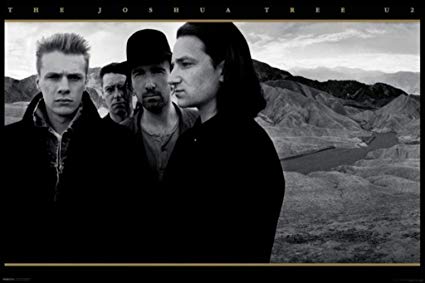
Was The Joshua Tree U2’s Pinnacle?

U2's 'The Joshua Tree' album was released to the world 32 years ago in March 1987. It was an incredible album from a band that was still relatively early in their career, but was it the pinnacle or did they go on to bigger and better things?

'The Joshua Tree' was the band’s fifth album and they would again tap Brian Eno and Daniel Lanois up to produce it. It went number one in both the UK and US selling 25 million records and counting. It was nominated for four Grammys in 1988 winning two, one of which was the biggest prize Album of the Year. In reality, The Joshua Tree is the point at which U2 became the biggest musical act in the world.

The album was the culmination of all the things U2 had worked so hard to accomplish and they did it their way and with integrity. The first three songs alone are jaw droppingly brilliant. “Where the Streets Have No Name” has to be one of the best album openers of all time with it’s goosebump producing guitar and drum. Throughout the album is a spectacular blend of ebullience, contemplation, anger and compassion. There is little that could be improved and it really is a masterpiece. And I must say, "With Or Without You" is one of my all time favourite tracks.
Never Bettered
For me though, U2 never bettered 'The Joshua Tree'. Its follow up, 'Rattle and Hum' started them on the downhill spiral, it was always going to have the bad luck of following up Joshua Tree and in that respect I still think it does quite well. With the exception of 'Achtung Baby' which almost reaches the heights, subsequent albums were self-absorbed experimental forays with U2 overestimating their talent.

The downhill curve really started to steepen with the release of 'POP', who had lots of the same topics and themes from their previous albums but just didn't quite deliver. In effect they fell off a cliff with 'POP'!! Some really long term fans say U2's last earnest album was 'War' and they sold out starting with 'The Joshua Tree' but I’m not having that.

I know it's hard for fans that got into U2 after 'Achtung Baby' and later to understand that they’d already reached their peak but it's true. And don't get me wrong either, after getting used to the 'Achtung Baby' it turned out to be their second best album for me. But they really haven't done anything special since then. 

The nineties and noughties really were patchy decades, yes they had occasional highs, indeed ‘Beautiful Day’ probably saved their careers and their legacy when it came out. I won't say they were terrible because they weren't, but what U2 have done since 1993 just doesn't do it for me any more. Interestingly, when I now go back and listen to the albums I do love of theirs, such as 'The Joshua Tree', 'War' and 'The Unforgettable Fire' I still enjoy them a lot. 

Pinnacle
For me, the peak U2 years were from 1983 to 1993. That doesn't mean everything after that has been crap, it's just that my enjoyment level hasn't been that consistent. I think 'War', 'The Unforgettable Fire' and 'The Joshua Tree' as a run of early albums was incredible for such a young band, always going up in big steps. The energy in tracks like "Sunday Bloody Sunday", "Pride" and "New Year’s Day" is incredible.
Just watch the video below and you'll understand.
Any critic or true music fan who doesn’t appreciate the mastery and impact of “The Joshua Tree” is simply not being honest with themselves or others. The album has had untold impact on the popular music scene for over thirty years. Whatever the consensus on the recent offerings from the band, “The Joshua Tree” deserves respect for what it was and has come to signify. I can therefore only reach the conclusion that yes, it was the band’s pinnacle.